
October 22, 2026
How Winter Makes Caregiving in Canada Harder and How to Help
Canadian winters can be hard on anyone, but they pose specific problems for family caregivers. Many of these challenges require a community effort to reduce risks to family caregivers. If you know a family caregiver, or if you are one yourself, let’s get ready for a safe and happy winter together. And even if you think you don’t know a family caregiver, there are certainly some living in your community whose safety is also partly your responsibility.
WHAT ARE THE BIG RISKS TO CAREGIVERS IN WINTER?
SUPPORTING SOMEONE WITH MOBILITY ISSUES ON SLIPPERY SIDEWALKS INCREASES THE RISK FOR BOTH
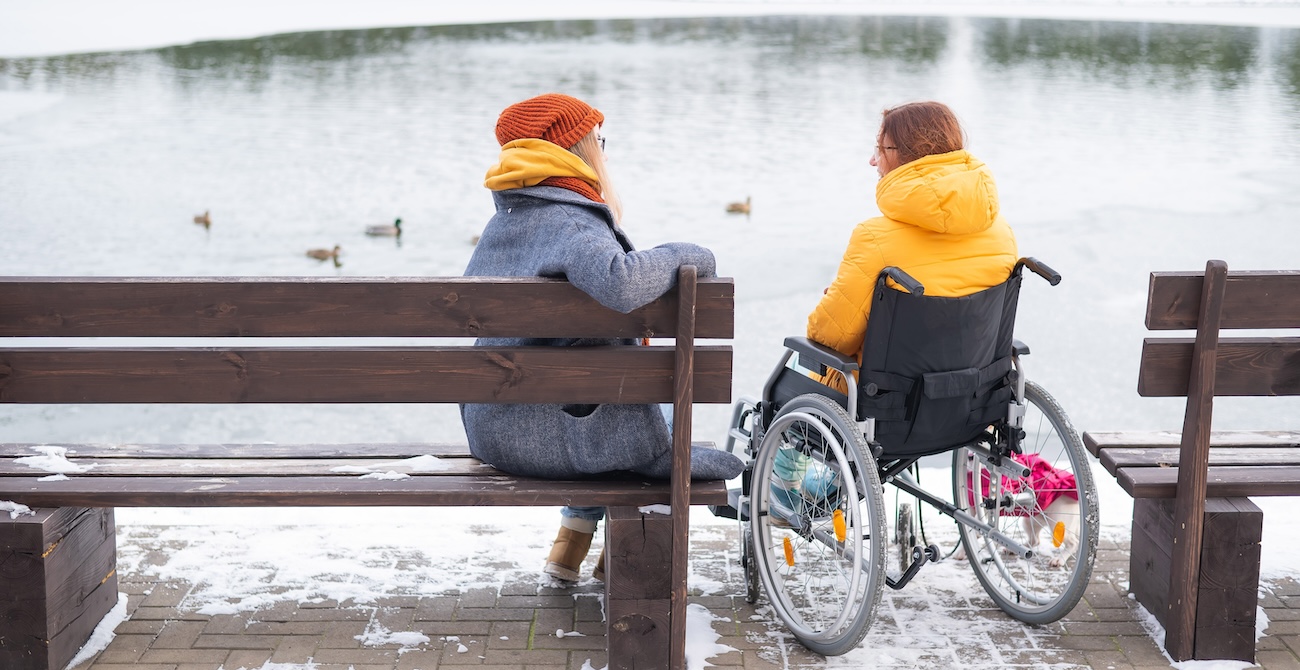
The most obvious winter risks are mobility-related. Ice and snow on the sidewalk, stairs, and driveways are hazards to everyone. People who use mobility devices and their caregivers are more likely to slip and hurt themselves because of poorly maintained walkways. Caregivers often hurt themselves trying to protect their care recipient from a fall, and this risk increases outdoors with the possibility of ice.
In most Canadian municipalities, it’s the law for everyone to clear their sidewalks. However, it can be logistically difficult to do this on time. Communities need to help each other to ensure sidewalks are safe. If your neighbour isn’t home, clear their sidewalk for them. If you know you have a neighbour with mobility issues, check in on them and help them figure out a system to get their own walkways cleared. And if you know someone in your neighbourhood is a family caregiver, ask if there is anything you can do to make sure they can safely get in and out with their care recipient.
SHOVELING SNOW IS ALSO A RISK
Thousands of people hurt themselves trying to clear ice and snow every year. These injuries range from muscle strains to heart attacks. Family caregivers may be tempted to meticulously shovel when it’s not entirely safe for them to do so. Watch out for family members who may be overestimating their physical fitness. Hiring someone else to clear snow or buying a snow blower can reduce the risks. If you live close enough, clearing snow for them is an enormous help.
LACK OF PHYSICAL EXERCISE
For many family caregivers and their care recipients, winter activities are not accessible. Getting out of the house and travelling to a community center or gym is much more difficult in the winter, but it’s even more challenging when you have to manage a mobility device. Care recipients may require help getting into winter attire, which can be a physical strain for caregivers. Many people who use mobility devices, especially wheelchairs or scooters, find they get cold much more quickly and can’t stay outside for long as a result. Some care recipients may not be able to tolerate cold days at all. It’s simply harder for family caregivers to get out when it’s cold.
As a result, family caregivers may reduce their own physical activity during the colder months, as well as potentially reducing activities for their care recipient. Friends and family can help by coordinating travel for activities and offering to help with transportation or respite. While maintaining exercise during the winter can be hard for all of us, it’s even harder when you’re managing care for a loved one.
SEASONAL AFFECTIVE DISORDER
The further north you live, the more you are at risk for Seasonal Affective Disorder. As the days get shorter, we lose our natural source of vitamin D, and our bodies’ natural rhythms are disrupted. Seasonal Affective Disorder shows up like other forms of depression: a feeling of exhaustion or reduced energy, a low mood and loss of interest in typical activities, and general sadness without a direct cause. It typically starts as the hours of sunlight decrease in the fall and subsides in the spring. Family caregivers are at a higher risk for depression and mental health concerns due to additional stress, and winter brings additional stress as part of the role.
Normalizing conversations about how the lack of sun can impact mental health is good for everyone. Buy your family caregiver a sun lamp designed specifically for Seasonal Affective Disorder and encourage them to talk to their family doctor about other interventions if they think they’re being affected. Like other forms of depression, physical activity and getting outdoors are helpful. If you’re able to provide support that allows a family caregiver to get outside and move, such as respite, transportation, or just companionship, this can also help a long winter go by more quickly.
SOCIAL ISOLATION, ESPECIALLY DURING THE HOLIDAYS
Spending more time indoors is a normal part of winter. Still, many of us can maintain a happy social life by dining out, visiting friends, and participating in other social activities. Travel conditions make it more difficult for family caregivers, often leaving them even more isolated during the winter.
The holidays can be especially difficult. Family caregivers may find it hard or impossible to participate in typical holiday activities like shopping for gifts or enjoying a gathering at a friend’s home. If the care recipient is seriously ill, there may be additional sadness or concern that there may not be many more holidays to share with this loved one.
This is where community needs to rally around caregivers and their care recipients. Here are some ways you can ensure family caregivers aren’t left out of the holidays:
- Bring the party to them if they’re willing to host – you can take on all the responsibilities of cleaning and preparing refreshments, and let them sit back and socialize.
- Invite caregiving neighbours over, even if you don’t know them well.
- Decorate for them if they can’t manage on their own.
- Book accessible restaurants with ample parking for social gatherings outside the home.
- Make sure they can get out shopping if that’s a part of their holiday experience, and if the care recipient is able, take them out on a separate occasion.
- Don’t forget to drop in for tea, arrange a Zoom call, and offer respite care.
- If you know a family caregiver who makes religious worship an important part of the holidays, find ways to help them participate. Faith-based organizations often have strategies to help families with extenuating circumstances join in important celebrations.
WINTER DOESN’T HAVE TO BE LONG AND DARK FOR FAMILY CAREGIVERS
Winter can also be a magical time in Canada. We often spend more time with loved ones during these months. Canadian communities need to rally around the family caregivers in their circle to ensure that magic is shared by everyone, especially those who are giving so much to others.